
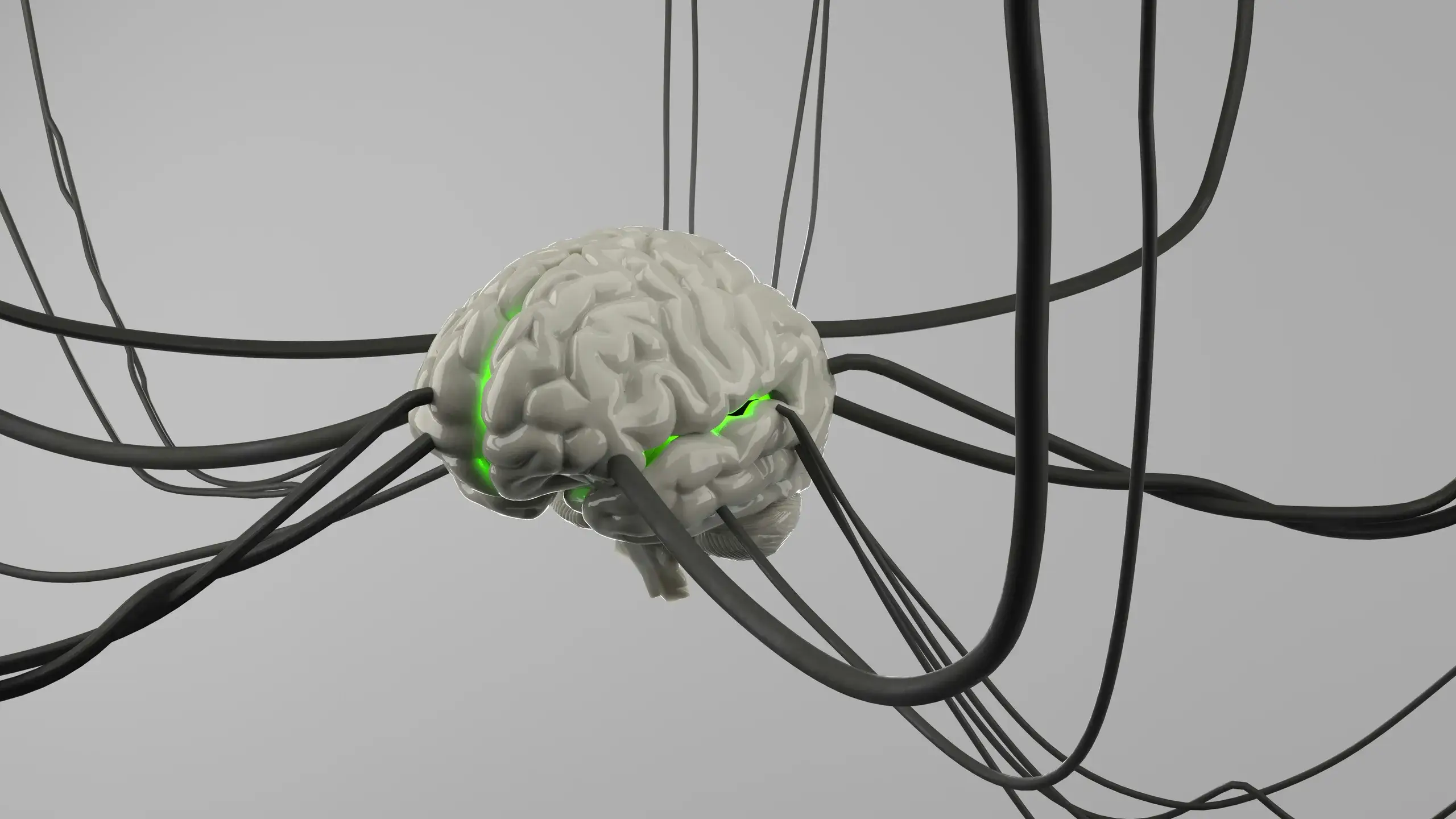
How the Nervous System Works and How to Reset It
The Autonomic Nervous System | How It Works
Nervous system regulation touches sleep, focus, performance, and stress. See how a balanced ANS shows up across every part of daily life.
You don’t decide to speed up your heart rate before a near-miss on the highway, and you don’t decide to slow your breathing down once you’re finally home safe and the door is locked behind you. Both of those happen automatically, run by a part of your body most people never think about until it stops working the way it should: the autonomic nervous system, or ANS.
Learn how this system is central to nervous system regulation as a whole, because every desired action and thought, sleep, focus, immune strength, mood, traces back to how well these two branches communicate with each other and work together.
Two Branches, One Job: Keeping You Alive and Functional
The ANS splits into two operating modes, and they work less like a light switch and more like two independent systems constantly negotiating with each other. One branch is built to prepare the body for action. The moment your body perceives a demand, a deadline, a confrontation, a genuine emergency, the sympathetic branch activates. It tightens your field of focus onto whatever triggered it, speeds your heart rate, dilates your pupils, and redirects blood flow away from digestion and toward the large muscle groups that would carry you through a fight or a sprint. It also releases cortisol and adrenaline, the two hormones responsible for the alertness and physical readiness most people describe simply as being “wired” or “on edge.”
This is a finely tuned survival mechanism, inherited from an evolutionary history in which reacting a fraction of a second faster was, quite literally, the difference between living and dying. The issue isn’t that this system exists, it’s that it’s designed to be temporary, and for a lot of people today, it isn’t functioning that way anymore.
The other branch is built for repair. Where the sympathetic branch accelerates, the parasympathetic branch slows the heart rate back down, restarts digestion, and lets your immune system do the quiet maintenance work that only happens when nothing urgent is competing for resources. This is also the mode in which deep, restorative sleep happens, rest-and-digest isn’t a figure of speech, it’s a literal description of what’s physiologically happening when this branch is dominant.
The Accelerator-and-Brake Model
Most people know these two branches by their common names, “fight-or-flight” and “rest-and-digest”, but the more useful way to think about them isn’t “on” and “off.” Picture a car with one pedal for acceleration and a separate, independent pedal for the brake. A well-functioning system uses both pedals constantly, in proportion to whatever’s actually happening on the road: pressing the accelerator when there’s a real demand and releasing it, fully, the instant that demand passes.
A dysregulated system is one that’s lost the habit of releasing the accelerator. It gets stuck riding it long after the road has cleared, which means the body stays primed for a threat that’s no longer there.
Why Your Body Can’t Tell the Difference Between”Printer Jam” and “Emergency”
Your ANS doesn’t have a separate setting for “the printer jammed” versus “there’s a genuine emergency.” Both register simply as a demand, and both trigger the identical physiological response sequence, elevated heart rate, redirected blood flow, a narrowed field of attention, and a burst of cortisol. The sympathetic response itself isn’t the problem. The problem is a system that’s forgotten how to release the accelerator once the actual demand has passed, and that’s exactly what happens when the stressors filling most people’s days never resolve the way a physical threat does. A predator encounter has a clear ending. An overflowing inbox does not. Neither does a phone that won’t stop producing notifications, or a tense conversation that keeps replaying in your head hours later.
From a Single Reflex to a Standing Pattern
That inability to release, to shift back to the repair-and-recovery branch once the moment’s genuinely over, is what shows up, day after day, as a body that never quite catches up on rest even when the schedule technically allows for it. It’s a physiological pattern that forms in response to sustained demand, in much the same way a muscle adapts to repeated load. And like any adapted pattern, it can shift, but it responds to changed inputs, not to being told to relax.
The Vagus Nerve’s Role in All of This
One structure does more work than almost any other in moving the ANS back toward parasympathetic dominance: the Vagus nerve. It’s the primary communication channel carrying “stand down and relax” signals from the brain to the heart, lungs, and digestive system, and it’s a large part of why techniques like slow breathing or humming can nudge the system toward calm, they’re stimulating this specific nerve directly. A body with strong “Vagal tone” tends to shift between the two branches more fluidly; a body with weak vagal tone tends to get stuck.
NuCalm Rescue VT (offered in 20 and 40-minute session times) are the world’s first patented neuroacoustic software tracks to feature the 130 Hz vibrational frequency of the Vagus nerve. The VT is an abbreviation for Vagal Tone.
The resonance of the “Voo” sound at 130 Hz is a vagus nerve stimulation technique to activate the parasympathetic nervous system and induce feelings of calm. Integrating 130 Hz into the frequency matrix of Rescue strengthens the reset and resilience of your nervous system.
Understanding these two branches, and the wiring that connects them, is the starting point for understanding nervous system regulation, how you’d actually measure which branch is dominant on a given day, what causes a system to get stuck in the sympathetic branch for months or years, and what it takes, behaviorally or technologically, to appropriately balance the parasympathetic side.
Questions about the autonomic nervous system
What does the sympathetic nervous system do?
It prepares the body for action when it perceives a demand. The sympathetic branch narrows your focus, speeds your heart rate, dilates your pupils and redirects blood flow from digestion toward the large muscle groups. It also releases cortisol and adrenaline, the hormones behind the alertness people describe as feeling wired or on edge.
What does the parasympathetic nervous system do?
It handles repair. The parasympathetic branch slows the heart rate back down, restarts digestion and lets the immune system do maintenance work that only happens when nothing urgent is competing for resources. Commonly called rest-and-digest, it is also the mode in which deep, restorative sleep happens.
Why does a minor problem trigger the same stress response as an emergency?
The ANS has no separate setting for a minor problem versus a genuine emergency. Both register simply as a demand, and both trigger the same physiological sequence: elevated heart rate, redirected blood flow, a narrowed field of attention and a burst of cortisol.
What is a dysregulated nervous system?
It is a system that has lost the habit of releasing the accelerator. It stays on it long after the road has cleared, so the body stays primed for a threat that is no longer there. This pattern forms in response to sustained demand, much like a muscle adapts to repeated load, and it can shift in response to changed inputs.
What is NuCalm Rescue VT?
Rescue VT, short for Vagal Tone, is a set of NuCalm tracks offered in 20 and 40-minute sessions. NuCalm says they are the world's first patented neuroacoustic software tracks to feature the 130 Hz vibrational frequency of the Vagus nerve, and that integrating 130 Hz into Rescue strengthens the reset and resilience of your nervous system.