The Force Behind Air Force Ken: How NuCalm Gave Ken His Life Back After a Traumatic Brain Injury
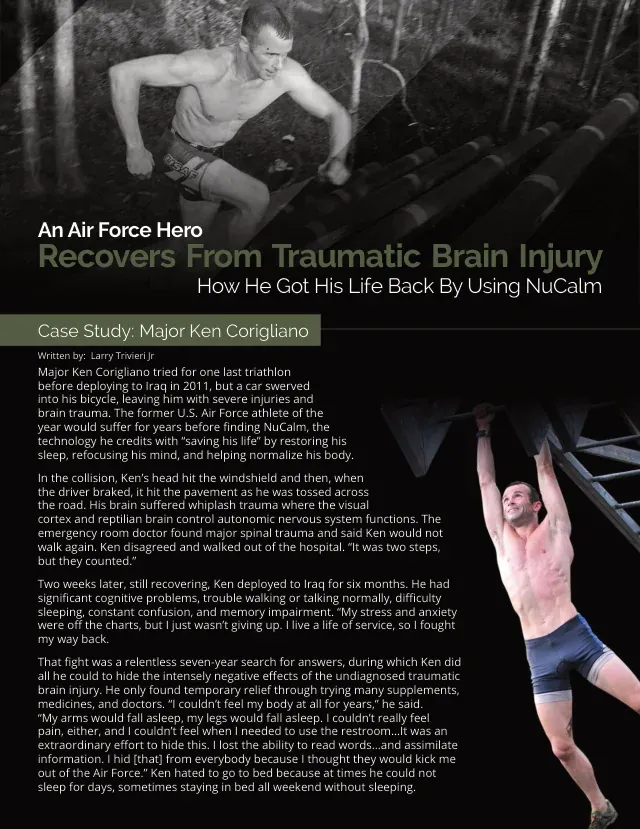
Major Ken Corigliano tried for one last triathlon before deploying to Iraq in 2011, but a car swerved into his bicycle, leaving him with severe injuries and brain trauma. The former U.S. Air Force athlete of the year would suffer for years before finding NuCalm, the technology he credits with “saving his life” by restoring his sleep, refocusing his mind, and helping normalize his body.
- Document
- Case study
- Author
- Larry Trivieri Jr.
- Participants
- Major Ken Corigliano, U.S. Air Force
Key findings
- After seven years of severe sleep disruption following an undiagnosed traumatic brain injury, Ken reports resolving his sleep problem in less than 30 days of NuCalm use.
- On his first use of NuCalm before a bike workout, his wattage meter output measured 20% higher and his heart rate 15% to 20% lower.
- His 400-meter time dropped from 1:10 to 1:05 and has held at 1:06 to 1:07 since. His 5K improved by 20 to 30 seconds.
- After back surgery and six months without training, he found his performance close to pre-injury levels after only two weeks of light workouts.
An Air Force Hero Recovers From Traumatic Brain Injury How He Got His Life Back By Using NuCalm Case Study: Major Ken Corigliano
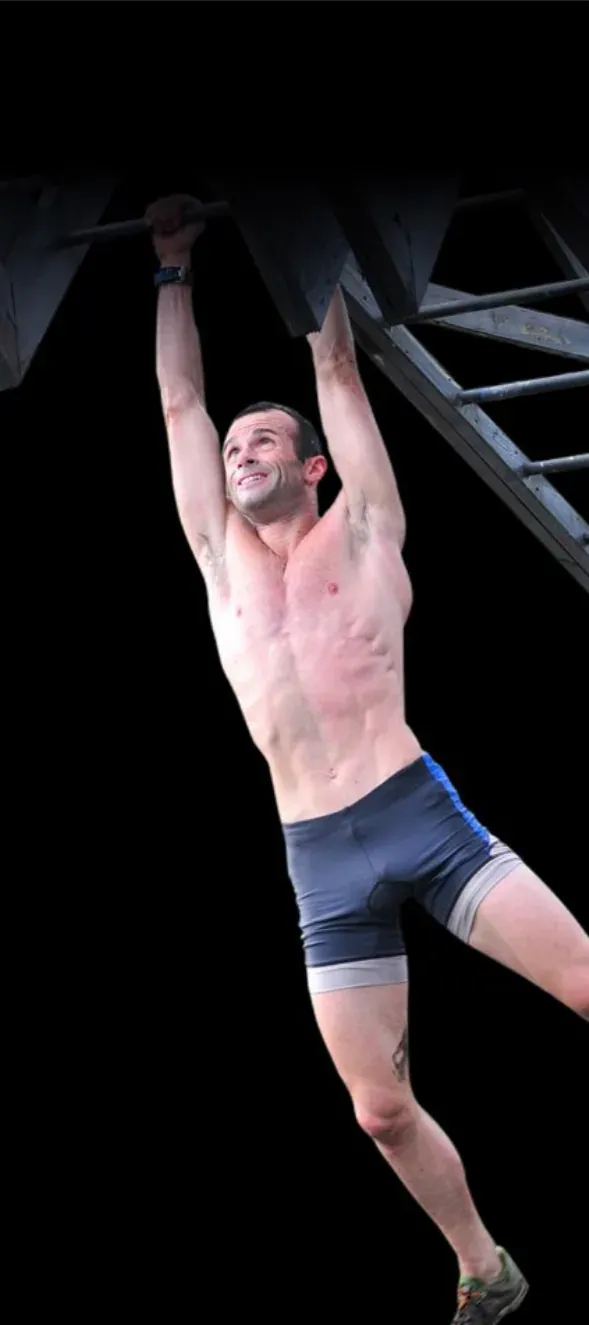
Written by: Larry Trivieri Jr
Major Ken Corigliano tried for one last triathlon before deploying to Iraq in 2011, but a car swerved into his bicycle, leaving him with severe injuries and brain trauma. The former U.S. Air Force athlete of the year would suffer for years before finding NuCalm, the technology he credits with “saving his life” by restoring his sleep, refocusing his mind, and helping normalize his body. In the collision, Ken’s head hit the windshield and then, when the driver braked, it hit the pavement as he was tossed across the road. His brain suffered whiplash trauma where the visual cortex and reptilian brain control autonomic nervous system functions. The emergency room doctor found major spinal trauma and said Ken would not walk again. Ken disagreed and walked out of the hospital. “It was two steps, but they counted.” Two weeks later, still recovering, Ken deployed to Iraq for six months. He had significant cognitive problems, trouble walking or talking normally, difficulty sleeping, constant confusion, and memory impairment. “My stress and anxiety were off the charts, but I just wasn’t giving up. I live a life of service, so I fought my way back. That fight was a relentless seven-year search for answers, during which Ken did all he could to hide the intensely negative effects of the undiagnosed traumatic brain injury. He only found temporary relief through trying many supplements, medicines, and doctors. “I couldn’t feel my body at all for years,” he said. “My arms would fall asleep, my legs would fall asleep. I couldn’t really feel pain, either, and I couldn’t feel when I needed to use the restroom…It was an extraordinary effort to hide this. I lost the ability to read words…and assimilate information. I hid [that] from everybody because I thought they would kick me out of the Air Force.” Ken hated to go to bed because at times he could not sleep for days, sometimes staying in bed all weekend without sleeping.
Ken discovered his solution at the 2018 Consumer Electronics Show in Las Vegas, where he tried NuCalm.
“I slept in that chair like I had never slept before. I also had a dream within 90 seconds. That was tremendous…My first experience with NuCalm really empowered me. During the first week of using NuCalm, I remember sitting on my bed, and I cried because I knew I had my life back. I’d bought a $2,000 bed that I thought would improve my sleep and it didn’t do anything, neither did any doctor or medication. But with NuCalm, I loved going to bed. I just loved it. I was going to dream, have good sleep, dream wonderful things, and wake up rested. This happened very fast. In less than 30 days, I was able to cure my sleep problem that I’d had for seven years. It was very emotional.”
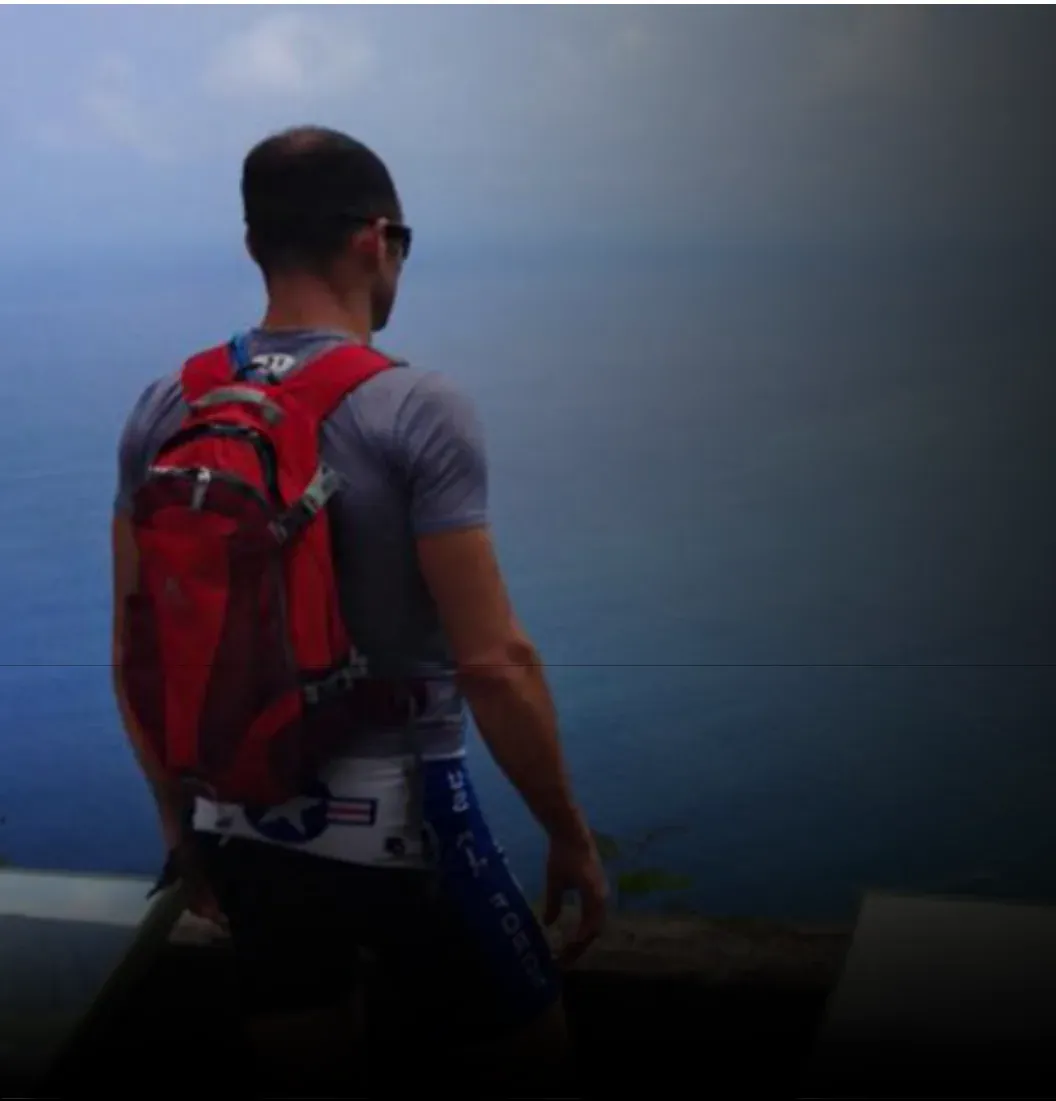
How NuCalm Began to Change His Life
Ken noticed that NuCalm gave him mental and emotional composure, and improved his cognition. When anger and frustration build now, he can intervene. When processing information, he is more calm and observant. “Now my memories and experiences come magically. I can go through a difficult situation calmly, and my memory recall has been amazing. For example, I only had 90 minutes of sleep one night before a scientific advisory board meeting. I hit the NuCalm 20-minute Power Nap, and I was sharp for the whole day.” Another big benefit comes when he travels. “I call it my time machine and when I’m done I’ll be like, ‘We’re here and I feel great!’ NuCalm also alleviates any jet lag 100%.”
NuCalm also has helped Ken’s doubtful wife. “The first night she used NuCalm her response was, ‘This is the greatest thing ever!’” They discovered benefits from playing NuCalm at night on a sound bar in their room, and then used the technique to get their two-year-old son down for naps. His wife tried it on her child care clients. “I walked in the house yesterday, and I couldn’t believe it. There were three two-year-old kids all sleeping at the same time,” he said.
Ken has shared his research about physical fitness with work colleagues online ever since he began excelling in athletics. Now, he shares how NuCalm has strengthened his competitive edge, combined with a rigorous training regimen, detailed later.
“I tell everyone I come in contact with about it. I don’t push products, typically. So when I say NuCalm is really good, it’s a little more potent,” said Ken, who is the Air Force chief of analysis, correlation and fusion since 2017. In that role, he oversees advanced data analytics and intelligence programs, and manages one of the intelligence community’s largest sites.
His Career & NuCalm
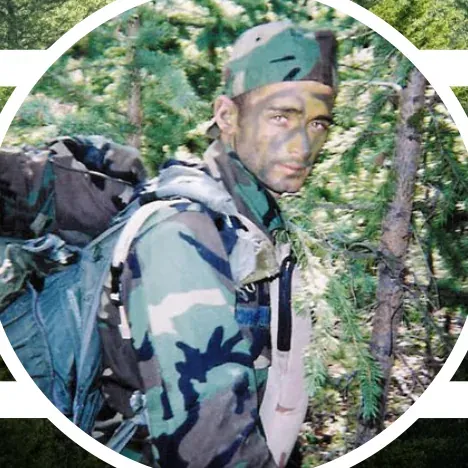
The Air Force has twice awarded Ken its commendation medal for heroism and for combat deployment. The first came in 2002, when he was injured twice making emergency repairs to his MC-130E Combat Talon 1, while delivering special operations teams into Uzbekistan and Afghanistan. This won him a commission to officer candidate school. He enrolled at Florida’s Saint Leo University and graduated magna cum laude.
Ken is a pioneer in predictive intelligence modeling, technologies that link data across multiple sources and platforms. In 2013, as chief of battlespace visualization and innovation for the United States Central Command, he created its first comprehensive, virtual, near-real-time data visualization program, as well as a unique and heavily used fusion intelligence system. He did all this with his “network of geniuses” from academia, national laboratories, commercial firms, the DOD, the intelligence community, and coalition entities.
This brilliant career almost never happened. While in Afghanistan, Ken ran out of breath sprinting for cover in body armor during an attack. At Saint Leo, Ken failed his first officer candidate fitness test. The Air Force took back its ROTC scholarship and levied him $100,000. “I couldn’t go into battle and expect others to do something I couldn’t do,” he said. “Also, there was no way I was going to get a medal for heroism then fail out of ROTC. That was not a life story option.” Determined, Ken became a walk-on member of the university’s NCAA Division II cross-country team, which improved his running and kept his officer candidate status. The team’s coach encouraged Ken to train as a triathlete, turning his disdain for running into a life-long passion for triathlons. He won eight gold medals in the 2006 Armed Forces Triathlon Championships, and honors have piled on nearly every year, even after the bicycle accident.
Ken & His Wife
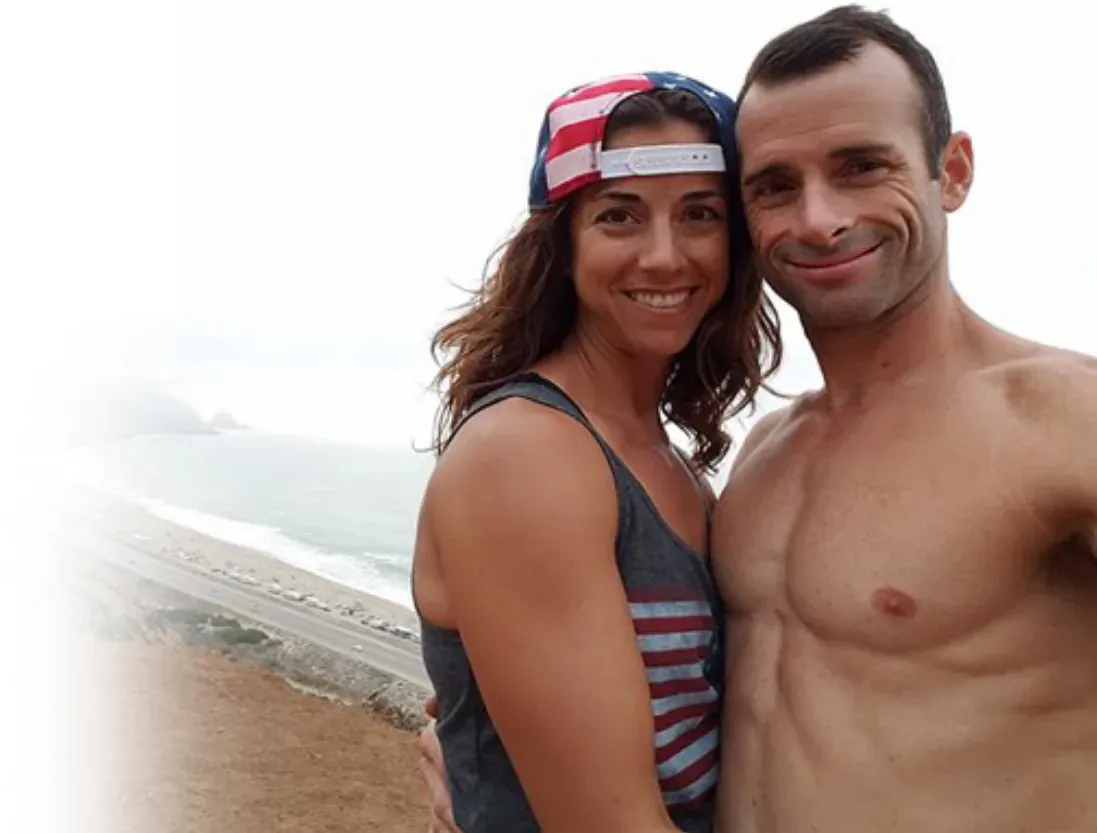
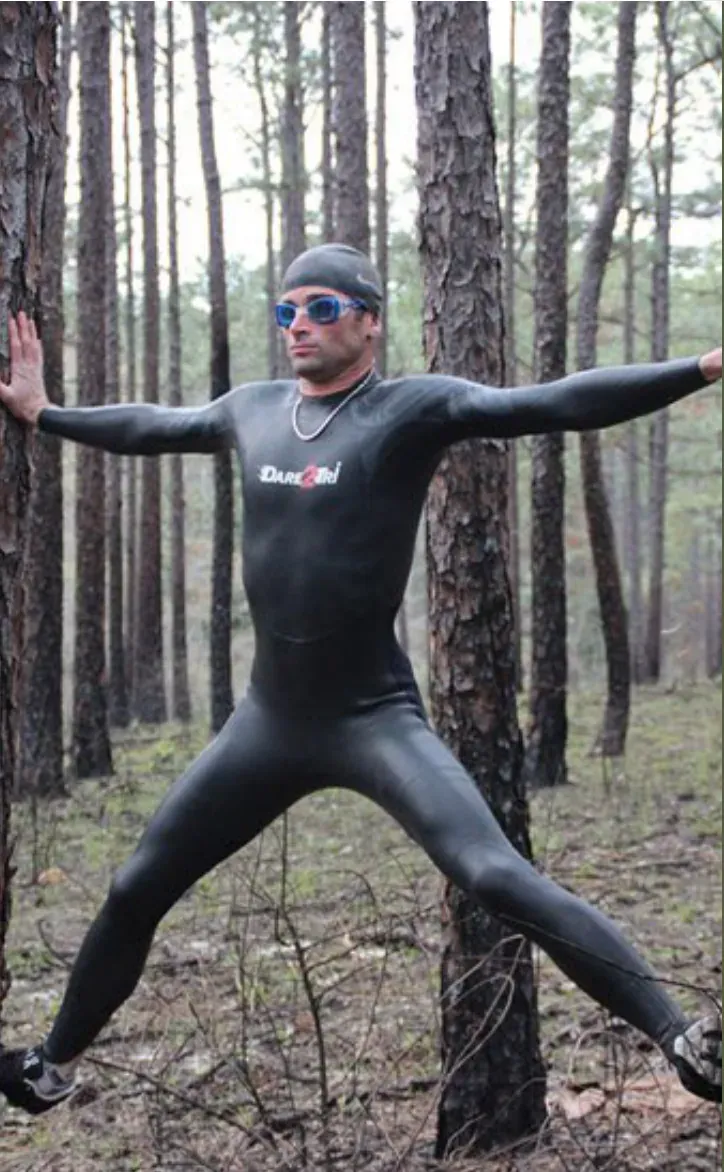
Ken and his wife are committed to an intense daily fitness regimen that incorporates periodization, a systematic resistance approach to athletic training. Their workouts include repetitions of running: on a 15% incline treadmill, on a 400-meter track while carrying a 50-pound sack, in 200- to 800-meter sprints, in 5Ks, and, on weekends, in either races or 15-mile runs. Their individualized programs integrate leg extensions and curls, stair machine exercises, swimming with or without a tether, weights, core exercises, stretching, and a stationary bike.
NuCalm & His Workout
The first time Ken used NuCalm before a workout on his bike, its very accurate wattage meter output measured 20% higher. His heart rate was 15% to 20% lower. “I couldn’t believe it. I actually got off my bike and looked at it, figuring something was wrong,” he said. “Then I was tapping my heart rate monitor. I reset everything. I didn’t realize it was NuCalm. At first, I didn’t link the two, and then I figured it out.” During his bike work, Ken usually did a final set standing on the pedals for ten minutes, simulating riding up a mountain, and could do a second set of only six or seven minutes. “That day, I did three rounds of ten minutes. My recovery was inexplicable,” he said, describing V02 Max, when the body hits its limit for processing oxygen. “That did not occur for me that day, and hasn’t since.” After NuCalm, Ken’s 400-meter runtime dropped from one minute, ten seconds, to 1:05 and has stayed between 1:06 and 1:07. In the 5K, he improved by 20 to 30 seconds, limited only by muscular ability. “I’ve never felt that before, ever. It was a complete shift in my training.”
Ken’s Success
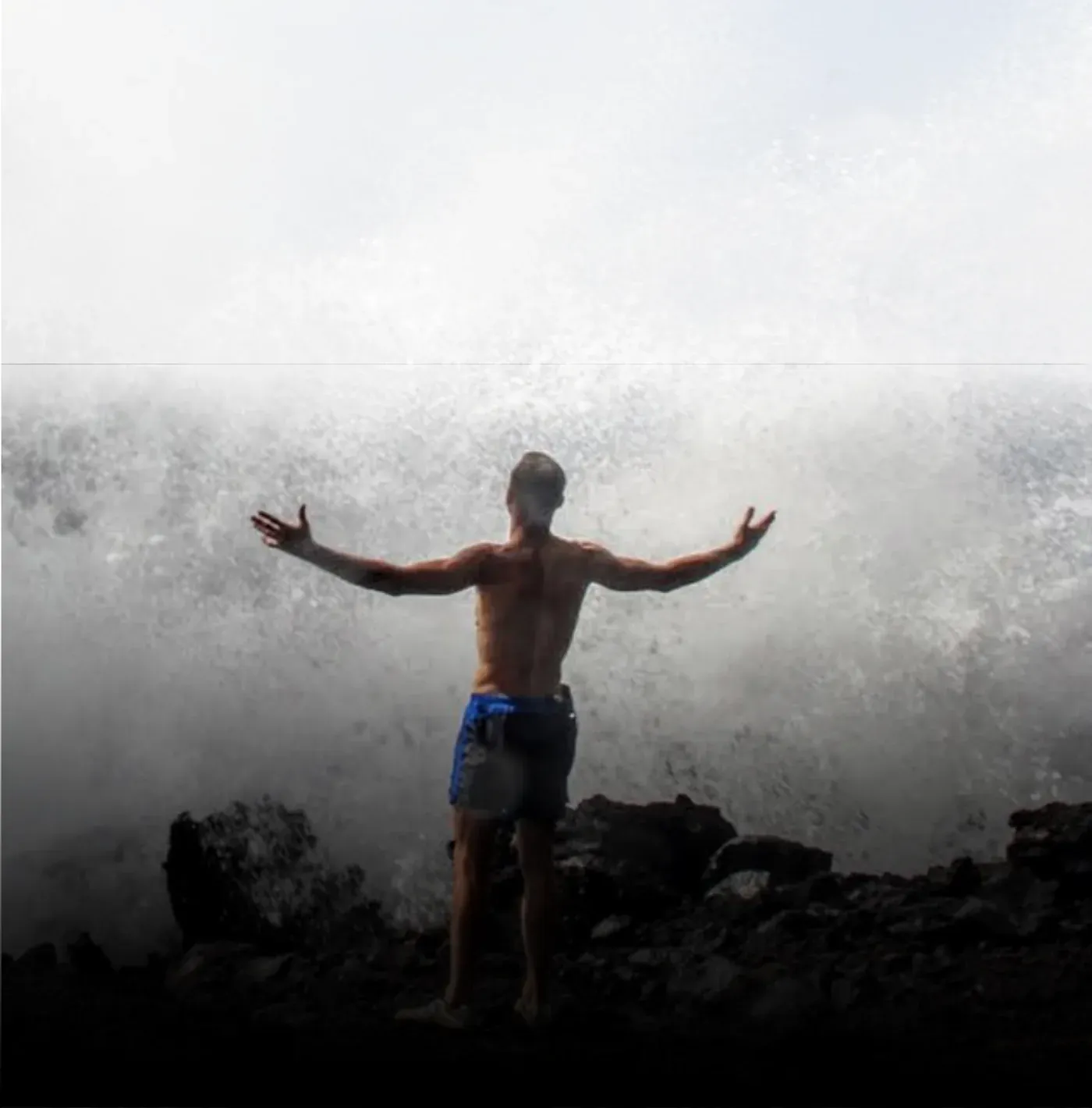
When an injury required back surgery and six months without training, Ken was stunned to find his performance very close to pre-injury levels after only two weeks of light workouts. He believes it was due to visualizing himself training while using NuCalm during his recovery. Ken wants NuCalm to go mainstream, especially in prison populations, VA hospitals, treatment centers for veterans with PTSD, and child care centers. “Those types of places need something easy that works,” he said. “With NuCalm, you’re helping the world,” he added. “It’s the solution you’ve wished you had, but never thought existed.”
To learn more about NuCalm, visit www.NuCalm.com.