The Neuroscience of NuCalm
NuCalm is patented neuroacoustic software designed to guide brain wave frequencies higher or lower. This page puts the evidence first, every number with its source and the studies behind it, and the full science underneath.
The numbers, and what they don’t mean.
You don’t need any of this to try NuCalm. It’s here for the skeptics, with the source beside every number and a plain note on what it shows.
NuCalm has been used in over 2,700,000 surgical procedures.
Those procedures used the clinical NuCalm system, in dental and surgical practices, to manage patient stress. They describe the clinical system, not the app you download today.
Source: NuCalm company figures, September 2026
36 years of patented neuroscience. NuCalm began in 1990.
The span of work since Dr. Blake Holloway began the research that became NuCalm. It counts years, not studies; the studies are listed below.
Source: NuCalm company figures, September 2026
Used by 79 professional sports teams since 2011.
Who chose it, not a study result. No team is named here without its permission.
Source: NuCalm company figures, September 2026
NuCalm has surpassed 2,500,000,000 total minutes played worldwide (equal to 4,756 years) as of 2026.
Total listening worldwide, as the company counts it. It measures use, not outcomes.
Source: NuCalm company figures, September 2026
Used in over 100 countries.
Where NuCalm has been used. It says nothing about how many people in each.
Source: NuCalm company figures, September 2026
Two U.S. patents.
U.S. Patent No. 9,079,030, issued July 14, 2015: “Systems and methods for balancing and maintaining the health of the human autonomic nervous system.” U.S. Patent No. 11,090,459, issued August 17, 2021: “Methods and devices for applying dynamic, non-linear oscillations and vibrations [to elicit a physiological state change in humans].” A patent proves the method is protected, not that it works for you.
Source: United States Patent and Trademark Office
NuCalm Research Studies
14 documents, each published here as a readable page with its source PDF. The dated ones run from 2013 to 2022. Of the 7 with a date, 6 predate the app, which arrived in November 2021, and several tested the earlier clinical system rather than the app alone. Each study page says what was tested, and on whom.
An Analysis of the Novel NuCalm Device for Anxiety and Depression Treatment
- Who
- 120 subjects, 60 with clinical depression and 60 with clinical anxiety, aged 25 to 45
- Measured
- EEG, Galvanic skin response (GSR), Heart rate variability (HRV), Non-linear HRV (ApEn, SamEn, DFA)
- One finding
- The LF/HF ratio, a marker of fight-or-flight arousal, fell from 3.21 in anxiety subjects and 2.44 in depression subjects to 1.28 with the biosignal processing disc, and to 1.10 with the disc plus neuroacoustic software.
Heart Rate Variability Analysis in Anxiety and Depression Treatment
- Who
- 20 subjects affected from anxiety and 20 subjects affected from depression, aged 25 to 45
- Measured
- Heart rate variability (HRV), Multifractal detrended fluctuation analysis (MF-DFA)
- One finding
- The multifractal spectrum width delta-alpha rose from 0.506 ± 0.06 before treatment to 0.919 ± 0.102 during transcutaneous vagus nerve stimulation.
Measurements of EEG, GSR, and HRV in Subjects with Depression and Anxiety
- Who
- 100 young subjects affected by anxiety or depression, aged 25 to 45
- Measured
- EEG and qEEG, Galvanic skin resistance (GSR), Heart rate variability (HRV)
- One finding
- GSR tone shifted from 61 ± 23 kOhm before treatment, a pathological value, to 420 ± 39 kOhm during treatment, inside the normal 100 to 700 kOhm range.

Dr. CK Peng's Affidavit on NuCalm Patent Application
- One finding
- Dr. Peng states he is not related to any of the inventors and has no personal, business or financial interest in the success of the application.
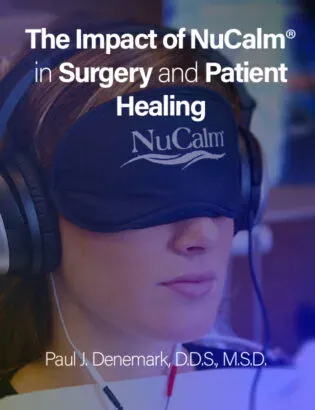
Impact of NuCalm® on Surgery and Patient Healing
- Who
- Four periodontal surgery case reports, one reference case without NuCalm and three with it
- Measured
- Post-operative pain and swelling, Blood pressure, Soft tissue healing
- One finding
- In a 66-year-old patient, systolic blood pressure fell from 149/72 mm Hg at the start of the appointment to 124/70 mm Hg at the conclusion of surgery following the NuCalm protocol.
The Evolution and Efficacy of NuCalm®
- Who
- A summary across nine studies, including 698 voice-analysis participants and an observational study of over 13,000 surgical patients
- Measured
- Heart rate variability (HRV), EEG, Galvanic skin response (GSR), Surface EMG, State Trait Anxiety Index (STAI), Voice stress analysis
- One finding
- Against a sham control, HF power returned to baseline in the control group after the session but stayed significantly above baseline in the NuCalm group, evidence of a carryover effect.
NuCalm Research Update: Impact on Autonomic Nervous System
- Who
- Hundreds of subjects across two populations, stage IV cancer patients and professional athletes, including Chicago Blackhawks players over an 8-week period in the 2015 regular season
- Measured
- EEG and qEEG, Heart rate variability (HRV), Respiratory sinus arrhythmia (RSA), Galvanic skin response (GSR), Blood volume pulse, Slow cortical potential, Neurotransmitter lab panels
- One finding
- In the cancer research subject, total power spectrum fell from 4099 at baseline to 3444 after 5 minutes and 297 after 25 minutes, a 92% reduction, with the LF/HF ratio falling from 4.105 to 2.672.
Case studies and the book
- The Force Behind Air Force Ken: How NuCalm Gave Ken His Life Back After a Traumatic Brain InjuryMajor Ken Corigliano, U.S. Air Force
- Improving Athletic Performance and RecoveryDr. David Walters, DO, PhD, integrative physician and CrossFit Games competitor in the 60+ division
- Meeting Cancer With Grace, Gumption & NuCalmBarbara Valentine, producer and multimedia executive, diagnosed with stage 4 metastatic triple positive breast cancer
- Trauma, Tragedy & TriumphJoseph "Blake" DeLoach, U.S. Army veteran, blinded in combat in Afghanistan
- Meditation & Wisdom of the EastBrother Craig Marshall, ordained swami, meditation teacher, transformational coach and speaker
- Achieving Physical, Mental & Emotional Recovery at RēCOVER NYCRick Richey and Aaron Drogoszewski, founders of RēCOVER, New York City
- A New Calm: A Story of Breakthrough Neuroscience Technology
Brain Wave Frequencies
NuCalm’s own map: the brain wave range each of the 8 products is built around. It is the company’s guide to what each product is built for, not a promise of what you will feel.
| Band | Range | What it is | Products |
|---|---|---|---|
| Gamma | 39Hz to 41Hz | Fully switched onThe fastest brain waves, linked to complex processing and alertness. | |
| Mid Beta | 15Hz to 20Hz | Critical thinkingFaster brain waves common in active thinking and normal waking consciousness. | |
| Alpha | 7.83Hz to 12Hz | Relaxed but awakeBrain waves common when you’re relaxed but awake. | |
| Theta | 4Hz to 7Hz | Drifting offSlow brain waves often seen during drowsiness and deep relaxation, just above deep sleep. | |
| Delta | 0.5Hz to 4Hz | Deep sleepThe slowest brain waves, common in deep sleep. |
What are brain wave frequencies and how does NuCalm work with them?
The brain consists of millions of brain cells forming trillions of connections. These building blocks of the brain, called neurons, communicate with each other through chemical and electrical signals. When masses of neurons send synchronized pulses, they oscillate and produce a wave-like effect or a brain wave. Brain wave frequency is measured in Hertz (Hz) or cycles per second. Higher order brain activity will produce high-frequency brain waves, such as beta or gamma waves. When we are awake, talking and in a normal working consciousness, we are in the beta brain wave frequency. As shown in the chart, human brain waves oscillate in a frequency range of 0.5Hz - 41Hz, and include 5 categories (delta > theta > alpha > beta > gamma).
Keep reading: how NuCalm works with brain wavesShow less
Many people spend much of the day in the stress response, run by the sympathetic nervous system. On the other side is the rest-and-digest response, run by the parasympathetic nervous system. Your nervous system is foundational to your health, performance, and longevity.
NuCalm’s patented technology is built into software that sits beneath music. The frequency following response is the brain’s tendency to fall into step with a steady rhythm it hears, and the neuroacoustic software is designed around it. NuCalm’s Rescue and PowerNap programs are designed to guide users to the alpha & theta frequency range (12Hz - 4Hz). FlowState is designed around alpha (12Hz - 7.83Hz).
Alpha is a pattern of brain activity common when you’re relaxed but awake. Theta is a slow pattern of brain activity often seen during drowsiness and deep relaxation. People often describe a Rescue, PowerNap orFlowState session as being aware of their surroundings while feeling close to sleep, with slowed breathing, a heavy body and a wandering mind.
NuCalm is patented and clinically proven to balance the nervous system. The studies above name the study, the institution and the product version (clinical device or app) behind each finding.
Where it came from.
For its first twelve years NuCalm was a clinical system, sold to clinicians for $5,995 and used in the room by dentists and surgeons. NuCalm was an FDA-cleared Class III medical device from 2009–2021, cleared for anxiety, depression, and insomnia. That was the clinical device, not today’s app.
Since November 2021 it has been an app. The app is the audio, the patented neuroacoustic software, and it comes without the device. That is why this site says “the technology behind NuCalm” about the clinical years, and never calls the app FDA-cleared.
- 2009
NuCalm 1.0 launches as an FDA-cleared Class III medical device (cleared 2009–2021), sold to clinicians for $5,995. The clinical system pairs the audio with three large chewable supplements and a cranial electrotherapy stimulation device.
- 2014
A transdermal topical cream replaces the supplements, still alongside the stimulation device.
- 2015
U.S. Patent 9,079,030 is issued for balancing and maintaining the health of the human autonomic nervous system.
- 2016
NuCalm 2.0. Rescue is its first release, in July 2016.
- 2019
The Biosignal Processing Disc replaces the cream and the stimulation device.
- 2021
U.S. Patent 11,090,459 is awarded on August 17.
- Nov 2021
NuCalm 3.0, and NuCalm becomes a consumer subscription: the audio in an app, with no device to buy.
NuCalm: The Basics
Imagine having the power of your brain in the palm of your hand.
Since the dawn of humankind, people have looked for ways to change how they feel: coffee and energy drinks for energy, alcohol to unwind, pills to get to sleep. Most work in the short term, and many come with side effects. NuCalm offers a different way: pick the state of mind you want and press play. There are no pills and no side effects.
Keep reading: the inventors and the markersShow less
36 years of patented neuroscience. NuCalm began in 1990. In 2009, NuCalm formed a 52-member medical advisory board of leading doctors, research scientists and academicians.
In the invention process we focused on 4 critical areas of the brain: the reticular activating system, the corpus callosum, the HPA axis, and the autonomic nervous system. To create effective neurobiofeedback within the complexities of the brain, we leveraged the auditory motor cortex, not just as a gateway for collecting auditory signals, but for its function in stimulating the prefrontal and frontal motor cortex. The brain is nonlinear, thus using proprietary, complex methods to present patterns that the brain won’t easily get bored with represents a significant challenge. The binaural signal processing, frequency-following-response neurobiofeedback is foundational to the software but cannot be the only effective elements. We also used specific techniques to evoke potential on a cellular level and increase electrical output focused on certain brain regions.
NuCalm 1.0 launched in 2009, NuCalm 2.0 in 2016, and NuCalm 3.0 in November 2021. The method of action has always been the neuroacoustic software. The clinical system also supported biochemistry using supplements and a stimulation device. After 12 years of constant innovation, we strengthened the neuroacoustic software to a place where we no longer needed biochemistry support. Now, it’s just the software.
A typical song file is about 5 MB. One NuCalm neuroacoustic program is over 1,536 MB, about 307 times the size of a song. U.S. Patent No. 9,079,030, issued July 14, 2015: “Systems and methods for balancing and maintaining the health of the human autonomic nervous system.” U.S. Patent No. 11,090,459, issued August 17, 2021: “Methods and devices for applying dynamic, non-linear oscillations and vibrations [to elicit a physiological state change in humans].”
Starting takes seconds: set your device to Do Not Disturb and press play. Rescue, PowerNap andFlowState are used lying down, with an eye mask and headphones. During a session, people often describe their breathing slowing and their body feeling heavy. There are no pills and no side effects.
“Developing a beneficial meditation practice can take countless hours over a period of years. By using NuCalm I can effectively and quickly access a state of mind where I have the ability to respond instead of react. I use NuCalm because I have post-traumatic stress. With as little as 20 minutes a day I get to respond to my feelings and thoughts instead of react to them. When I have the ability to respond I can be humble, thoughtful, patient and kind. When I react instead of respond I can be aggressive, irritable and fearful. NuCalm aids me into being the version of myself that is genuine and real. It is who I am without PTS.”
“I use NuCalm every day and I have been for over 5 years. In fact, I feel like I’m at a disadvantage if I don’t use it. I call it my secret weapon and I’ve noticed with NuCalm in my life – I sleep better. I have less stress. I certainly have greater focus. And my focus has always been strong, but it’s definitely stronger. I have more mental alertness, greater levels of mental energy, and less brain fog. I have a deep sense of calm and peace. For me, peace of mind is high currency.”
“The ability of NuCalm to reduce sympathetic discharge, and its impact on the autonomic nervous system, is clearly a freestanding and noteworthy contribution to society and our high-paced, stress-filled lives. We know that every organ system in the human body is disturbed when sympathetic tone predominates excessively and chronically. The sympathetic discharge associated with sleep deprivation and long working hours under stress allows opportunistic viruses and bacteria to colonize and challenge our system. When confronted with chronic inflammatory conditions, cancer, bacterial/viral infections, and other assaults to homeostasis, it becomes critical to optimize the immune system. NuCalm demonstrates the immune-boosting role of shifting to a parasympathetic-dominated tone.”
Numerous physiological markers are available which provide data to analyze the efficacy of the NuCalm clinical system in decreasing the sympathetic nervous system response and anxiety. These markers include galvanic skin response, temperature, blood volume pulse, heart rate, heart rate variability (including HRV amp, SDNN, RMSSD, %LF, %HF, and LF/HF) and brain waves (including beta, alpha, theta, and delta amplitudes, alpha/theta crossover and slow cortical potentials). Each of these physiologic markers demonstrates a particular response (increase or decrease) under sympathetic and parasympathetic stimulation.
Galvanic skin response (GSR) is a method of measuring the electrical conductivity of the skin, which varies with its moisture level. This is notable because the eccrine glands are controlled by the sympathetic nervous system, so skin conductance is used as an indication of psychological or physiological arousal. There is a relationship between sympathetic activity and emotional arousal such as fear and anger. The GSR is highly sensitive to emotions in some people. Human eccrine glands receive primary signals from sympathetic cholinergic fibers that are controlled by the neurotransmitter acetylcholine. In measuring GSR, a very slight electrical current is run through the skin and changes in the salt and water in the sweat gland ducts are measured. The more emotionally aroused the subject is, the more active the sweat glands are and the greater the electrical conductivity of the skin. An increase in GSR occurs with sympathetic stimulation and decreases with parasympathetic stimulation.
Dermal temperature is another measure of sympathetic arousal. Dermal temperature decreases with sympathetic stimulation and increases with parasympathetic stimulation.
Blood volume pulse (BVP) is measured by photoplethysmography, which is a non-invasive transducer to measure the relative changes of blood volume in a subject’s finger or temple. An infrared light source is transmitted through or reflected off the tissue, detected by a phototransistor, and quantified in arbitrary units. Less light is absorbed when blood flow is greater, increasing the intensity of the light reaching the sensor. The wave form obtained from such a transducer represents the BVP of the subject, which is the phasic change in blood volume with each heartbeat. Heart rate is simply the number of beats of the heart per time interval. Heart rate increases with sympathetic stimulation and decreases with parasympathetic stimulation. The BVP likewise increases with sympathetic stimulation and decreases with parasympathetic stimulation.
Heart rate variability (HRV) consists of beat-to-beat differences in intervals between successive heartbeats. In general, emotional stress gives rise to heart rhythm patterns that appear irregular and erratic. The heart rate variability waveform under stress appears as a series of uneven, jagged peaks (i.e., an incoherent heart rhythm pattern). Physiologically, this pattern indicates that the signals produced by the two branches of the autonomic nervous system are out of sync with each other. This incoherent pattern of physiological activity associated with stressful emotions can cause the body to operate inefficiently, deplete energy, and produce extra wear-and-tear on the body. This is especially true if emotional stress is prolonged or frequent. During positive emotions, the heart rhythm pattern becomes highly ordered, appearing like a smooth, harmonious wave. This is called a coherent heart rhythm pattern. With coherent heart rhythm, the activity in the two branches of the autonomic nervous system is synchronized and the body’s systems operate with increased efficiency and harmony.
HRV data can identify anxiety and stressful influences on the cardiovascular system. The interbeat interval is a portal through which parasympathetic and sympathetic influences may be observed. HRV is a measure of the variation of the beat-to-beat interval. Increased HRV has been shown to have positive clinical significance, whereas reduced HRV has been associated with negative clinical outcomes and conditions. Variation in the beat-to-beat interval is a physiological phenomenon resulting from several different inputs to the sinoatrial node, which is the impulse-generating, pacemaker tissue located in the right atrium of the heart, and thus the generator of normal sinus rhythm. The main inputs are the sympathetic and the parasympathetic nervous systems. The two primary fluctuations are respiratory arrhythmia and low-frequency oscillations. Respiratory arrhythmia is associated with the respiratory rate and low-frequency oscillations are associated with Mayer waves of blood pressure (waves in arterial blood pressure brought about by oscillations in baroreceptor and chemoreceptor reflex control systems).
The most widely used methods for measuring HRV are time-domain methods and frequency-domain methods. The time-domain methods are based on the beat-to-beat or NN intervals, which are analyzed in a variety of ways. Included among these are the SDNN (the standard deviation of NN intervals) and the RMSSD (the square root of the mean squared difference of successive NNs). These are measures representing sympathetic or parasympathetic influence. Increased scores of these measures represent greater parasympathetic influence. Norms for these measures are: RMSSD 27.2 +/- 12.3 and SDNN 136.5 +/- 33.4.
Measurements assessed with frequency-domain methods include LF, LF norm, HF, HF norm, and LF/HF ratio. HRV rhythms in the low frequency (LF) range (between 0.04 to 0.15Hz) reflect mixed sympathetic and parasympathetic activity. Mental stress increases LF activity and is usually considered a marker of sympathetic modulation. The high frequency (HF) range (between 0.15 to 0.4Hz) contains rhythms regulated by parasympathetic activity and corresponds to N-N variations caused by respiration. Deep, even breathing activates the parasympathetic nervous system and raises the amplitude of HF. Mental stress decreases HF activity. Vagal activity is the major contributor to the HF component. With the LF/HF ratio, high numbers mean dominance of sympathetic activity while low numbers mean dominance of the parasympathetic activity. After deep and even breathing, an increase reflects changes in the parasympathetic regulation. HRV decreases with sympathetic stimulation and increases with parasympathetic stimulation. Consistent with this result, the HRV LF% and the LF/HF ratio increase with sympathetic stimulation and decrease with parasympathetic stimulation.
Various brain waves are associated with states of wakefulness and sleep, mental activity related to cognitive, sensory, and motor activities, and emotions such as fear and anxiety. Beta brain waves are fast brain waves that reflect normal waking consciousness. Beta amplitudes increase with sympathetic stimulation. There is a range of beta waves: low beta, relaxed but alert (~13Hz - 15Hz), the middle of the range, often linked with active learning (~15Hz - 19Hz), and high beta, which is the anxious brain (associated with fear and anxiety) exhibiting brain wave frequencies ~23Hz - 38Hz. Alpha waves indicate a comfortable, relaxed state, 8Hz - 12Hz, and are associated with relaxation, daydreaming, and idleness. Theta waves reflect a deeply relaxed state, 4Hz - 7Hz. Delta waves are indicative of the sleep state wherein signals are moving through clusters of neurons very slowly, around 4Hz. Delta amplitude progressively decreases during sleep. Delta waves are related to V waves, which occur during sleep, and to slow cortical potentials.
The production of alpha and theta patterns in the brain is correlated to the relaxation response. The relaxation response reduces heart rate and blood pressure, relaxes muscles, and increases oxygen to the brain. The relaxation response is extremely beneficial to learning and problem solving and is accompanied by alpha (higher amplitude, lower frequency brain waves) and theta rhythms (even greater amplitude, lower frequency brain waves). The brain wave frequencies increase with sympathetic stimulation and decrease with parasympathetic stimulation.
Alpha to theta crossover occurs just at pre-sleep, providing a dissociative hypnagogic experience of profound relaxation. Alpha to theta crossover is where people experience restorative sleep and the loss of a sense of time and place. It is sometimes called the hypnagogic state. The alpha-theta crossover state is a deeply relaxed state in the alpha (8-12Hz) and the theta (4-7Hz) range, right on the edge of sleep. The name comes from the behavior of the brain waves. Alpha waves are usually higher in amplitude, or more powerful, than theta. Alpha-theta crossover is when the amplitude of the alpha waves drops and the theta amplitude rises to the point where it crosses over the alpha waves, indicating it has become more powerful. Alpha-theta crossovers decrease with sympathetic stimulation and increase with parasympathetic stimulation.
Slow cortical potentials (SCPs) are gradual changes in the membrane potentials of cortical dendrites which are in the frequency range below 1Hz - 2Hz that last from 300ms to several seconds. Negative potential shifts indicate mobilization or higher excitability, positive SCP shifts represent reduced excitability or inhibition of neuronal activity. Slow cortical potential shifts in the electrical negative direction reflect the depolarization of large cortical cell assemblies, reducing their excitation threshold. SCPs increase with sympathetic stimulation and decrease with parasympathetic stimulation.
The Patented NuCalm Neuroacoustic Software
The neuroacoustic software is the heart of NuCalm: the method of action has always been the neuroacoustic software. Dr. Blake Holloway designed it around four goals: recover, restore, reboot, and rebalance. NuCalm 3.0, released in November 2021, follows NuCalm 1.0 (2009) and NuCalm 2.0 (2016).
The audio is built from binaural signal processing, isochronic tones and patented, non-linear oscillations, designed to keep shifting rather than repeat one fixed pattern.
Keep reading: how the software is builtShow less
In the invention process Dr. Holloway focused on 4 critical areas of the brain: the reticular activating system, the corpus callosum, the HPA axis, and the autonomic nervous system. To create effective neurobiofeedback within the complexities of the brain, Dr. Holloway leveraged the auditory motor cortex, not just as a gateway for collecting auditory signals, but for its function in stimulating the prefrontal and frontal motor cortex. The brain is nonlinear, thus using proprietary, complex methods to present patterns that the brain won’t easily get bored with represents a significant challenge. The binaural signal processing, frequency-following-response neurobiofeedback and isochronic wave form are foundational to the neuroacoustic software but cannot be the only effective elements. Dr. Holloway also used specific techniques to evoke potential on a cellular level and increase electrical output focused on certain brain regions. These are spikes in brain electrical activity observed in response to the presentation of an auditory stimulus. Multiple stimuli delivered a certain number of times per second, mimicking the desired brain frequency level, can create evoked potentials in the brain at that same frequency level.
To create an auditory evoked response at a frequency range between 12Hz - 4Hz (alpha and theta), is difficult because human ears cannot receive sounds delivered under 20Hz. This is where the brain’s compensatory mechanisms leveraging binaural signal processing come into play. This method involves simultaneously delivering two tones with different frequencies into the left and right ears, for example, 250Hz to left ear, and 255Hz to right ear. These sound waves will initially meet in the superior olivary complex, a structure in the brainstem, where they will interfere constructively and create a resultant beat frequency calculated by the difference between the two tones’ frequencies (255Hz - 250Hz = 5Hz beat frequency, which is theta).
The beat frequency at any level can then be transmitted to and perceived by the auditory cortex of the brain. Repeated presentations of binaural signal processing and isochronic wave forms create repetitive auditory evoked potentials which induce a frequency following response in the brain, meaning multiple neural networks will begin oscillating at that specific beat frequency. This brain wave synchronization has been verified in electroencephalography and quantitative electroencephalography studies conducted by Dr. Holloway and NuCalm’s 52-member medical advisory board of leading doctors, research scientists and academicians.
One NuCalm neuroacoustic program is over 1,536 MB, about 307 times the size of a typical 5 MB song file.
NuCalm’s Rescue and PowerNap programs are designed to guide users to the alpha & theta frequency range (12Hz - 4Hz). Alpha (12Hz - 8Hz) is common when you’re relaxed but awake. Theta (7Hz - 4Hz) is a slow pattern often seen during drowsiness and deep relaxation, just above deep sleep, and is associated with parasympathetic activity and slow, deep breathing.
Why so much information? Because the brain is complex and quick to find patterns. The non-linear oscillations are designed to hold the attention of the reticular activating system, the brain’s filter for incoming stimulation, while the algorithm is designed so the brain doesn’t settle into a predictable pattern, whichever product you choose, from DeepestSleep to Ignite.
The creation of the NuCalm neuroacoustic software goes beyond Dr. Holloway’s neuroacoustic physics. We also have to create a good listening experience for the NuCalm user. The soundtrack process is sophisticated, precise, and time consuming. Dan Selene and his team have to work within the confines of the frequency and pitch matrix of the physics. Meaning that each note has to be in congruence with the pitch and frequency of the physics or we would be creating resistance to the physiological outcome. As an example of the detail considered in each neuroacoustic program, the first release of NuCalm 2.0, NuCalm Rescue in July 2016 contained the following to support and enhance the efficacy of the neuroacoustic software: original musical compositions, music licensed from a world-renowned guitarist, holophonic 3D recordings of night sounds at a vortex in Sedona, AZ as well as sunrise at the ocean in Big Sur, CA. Holophonic is a binaural recording system based on the claim that the human auditory system acts as an interferometer. It relies on phase variance, just like stereophonic sound. The sound characteristics of holophonics are most clearly heard through headphones, though they can be effectively demonstrated with two-channel stereo speakers, provided that they are phase-coherent. The word “holophonics” is related to “acoustic hologram.”
The NuCalm neuroacoustic software development process is part creative artistry and part complex science. The scientific process involves meticulously creating music to match the physics of the binaural signal processing and isochronic wave form frequency-following response neuroacoustic software developed by Dr. Holloway. Each segment of music is specifically matched to the time signatures of the pitch and frequency matrix and non-linear oscillations of the underlying physics. The NuCalm Rescue programs are composed around a tropical environment with specially tuned instrumentation. Each Rescue program weaves together between 23 and 54 separate audio layers.
The Autonomic Nervous System
| Organ | Sympathetic the stress response | Parasympathetic rest and digest |
|---|---|---|
| Pupils | Dilate | Constrict |
| Saliva | Inhibited | Stimulated |
| Airways | Relax | Constrict |
| Heartbeat | Speeds up | Slows down |
| Stomach | Activity inhibited | Activity stimulated |
| Liver | Releases glucose | Glucose release inhibited |
| Gallbladder | Inhibited | Stimulated |
| Intestines | Activity inhibited | Activity stimulated |
| Bladder | Relaxes | Contracts |
The autonomic nervous system (ANS) controls the involuntary bodily functions – pupillary response, heart rate, respiration, digestion, and sexual arousal. The autonomic nervous system is composed of the sympathetic nervous system (stress response) and the parasympathetic nervous system (rest and digest response). The ANS is closely tied to stress, fear and worry, and runs the fight-or-flight-or-freeze response. In humanity’s ancient past, the fight-or-flight response played an essential role in helping to keep our ancestors alive in the face of such dangers as predatory animals and natural occurrences such as earthquakes, floods, and volcanic eruptions. Researchers have discovered that actual physical danger is not necessary to trigger the fight-or-flight response. It can also be triggered by our thoughts and beliefs. Simply put, if you habitually focus on thoughts and beliefs of a limiting or negative nature, you are causing your body to act as if it is in danger. This results in the chronic production of stress hormones, specifically cortisol.
Keep reading: stress, sleep and the nervous systemShow less
Stress is a biological response to the stimulus of a threat, either real or perceived. During an acute stress response, two parallel pathways are activated to prepare the body for fight-or-flight, the sympathetic adreno-medullary (SAM) arm of the autonomic nervous system and the HPA axis. Both systems can be triggered in a bottom-up manner from the brainstem by critical homeostatic perturbations, like respiratory distress, pain, or inflammation – which pose real threats. They can also be triggered in a top-down fashion from the limbic system, particularly from the amygdala, by psychogenic stressors, either innate or experiential – perceived threats. Your thoughts can trigger this response, and often do. The SAM triggers the release of epinephrine (adrenaline) and norepinephrine (noradrenaline) from the adrenal medulla into the bloodstream.
As these hormones circulate through the body, respiratory rate and heart rate accelerate and blood pressure increases to maximize the delivery of oxygenated blood to vital organs. This alerts the body to speed up, tense up, become hypervigilant, and take action for survival. In parallel, the HPA axis (The Hypothalamus-Pituitary-Adrenal axis) triggers a series of hormonal signals to maintain this state of hyper-alertness. The hypothalamus releases corticotropin-releasing factor (CRF), which signals the anterior pituitary gland, to release adrenocorticotropic hormone (ACTH). This hormone travels to the adrenal glands, prompting them to release cortisol, the well-known stress hormone. The release of cortisol can increase the production of epinephrine, as well as trigger the glucose release from protein to supply the body with energy.
Once this happens, blood vessels that supply oxygen and nutrients to our body’s cells and organs are constricted so that more blood can be made available to nourish the tissues of our body’s major muscle groups, especially in our arms and legs, since it is primarily these extremities that the body uses to fend off external attacks and get out of harm’s way. Prior to this response, the blood in the body is concentrated in what are known as the abdominal visceral organs. These include our adrenal glands, kidneys, liver, gallbladder, stomach, intestines, colon, and appendix – the organs responsible for digestion and absorption of foods and nutrients, excretion, and various other functions that provide for proper cell growth and production of cellular energy. As blood is rushed to the tissues of the arms and legs, the visceral organs cannot function at 100%, causing all growth-related activities in the body to become limited. If this process continues for sustained periods of time, our body’s overall functioning is compromised, and we begin to break down. Once the fight-or-flight adrenaline response is activated, the mind cannot rationalize itself or self-regulate until the threat is removed and time passes, because the amygdala has taken oxygen rich red blood cells from the frontal cortex, negating access to executive function, logic, and decision making.
When there aren’t any threats, the HPA axis is in what might be described as “idle mode.” This state of idleness allows the rest of our body to flourish the way that nature intended. And the way nature intended for all humans is to be in autonomic nervous system balance, where we exhibit sympathetic nervous system responses throughout the day, but also activate the rest and digest restoration of the parasympathetic nervous system.
Chronically elevated stress hormones are linked with suppressed immune function, impaired digestion and increased muscle tension.
Sleep disorders are another area where stress is involved. To achieve healthy sleep our body’s normal cycle of hormone production must operate efficiently, especially regarding cortisol. When we are healthy, cortisol levels are highest in the morning (6-8 AM) and lowest in the evening, where they continue at a low level as we fall asleep. This allows our body to release sleep enhancing hormones, such as melatonin and serotonin, leading to deep, restful sleep. Stress interferes with this process. When we are stressed, cortisol levels remain high, even into the night, preventing restful sleep. Over time, the cycle of cortisol production becomes unbalanced, and even reversed, with levels spiking in the evening and falling in the morning, resulting in feelings of exhaustion. Trouble falling asleep and restless sleep (awakening throughout the night) are both common examples of sleep disorders that are associated with nighttime spikes in cortisol and other stress hormones, including, in some cases, adrenaline. Stress compromises the amount and quality of restorative sleep.
Stress, more than anything else, has the greatest potential to sabotage every aspect of our life. Our health, our relationships, our work, our productivity, our brain function, and cognitive abilities, and even our ability to simply enjoy our day can all be negatively impacted by stress. Yet, despite all that we know about the importance of managing stress, as a society we seem more stressed than ever before, especially with COVID-19.
So, what can we do about stress? Well, the first thing we can do is to accept it, appreciate it, and understand that stress is real, stress impacts every human on Earth every day, and the human physiological response as described above is the same in each of us. No one is impregnable to stress, so we must address it. Many people seek yoga, Tai Chi, mindfulness, or deep breathing exercises as healthy pathways to managing stress and activating the parasympathetic nervous system. Many others manage stress through the consumption of drugs and/or alcohol. All these approaches have an impact on slowing down the human stress response, but as most of us know, the path of drugs and alcohol has negative consequences that lead to more stress and depreciation of the mind and body.
But there is also another path to managing stress, and this one is founded in applied neuropsychobiology, has no drugs, no side effects, and is easy to use. NuCalm was invented out of necessity by Dr. Blake Holloway. Dr. Holloway served the military veteran community in San Antonio, Texas for more than 40 years. His invention path began over 35 years ago, which illustrates the challenges inherent in trying to solve complex problems such as down regulating the sympathetic tone (stress response) with predictability, reliability, safety, and ease for people suffering from Post-Traumatic Stress, often comorbid with addiction.
Rescue, PowerNap and FlowState are designed to guide brain wave activity toward alpha & theta, a deeply relaxed state. When the fight-or-flight response is active, resources shift toward survival and away from the prefrontal and frontal cortex, where patience, presence and decision making live. That’s why, under stress, people tend to react instead of respond.
Practices like yoga, breathing exercises and mindfulness help many people, and they take time and practice. Drugs and alcohol carry the risks of addiction and physical harm. NuCalm asks for neither practice nor pills: pick your state of mind and press play.
Starting takes seconds: set your device to Do Not Disturb and press play. Rescue, PowerNap andFlowState are used lying down, with an eye mask and headphones. During a session, people often describe their breathing slowing and their body feeling heavy. There are no pills and no side effects.
“We are measuring the impact of NuCalm on human physiology and concussion healing using heart rate measurement and heart rate variability (HRV). We look for enhancing the vagal tone, which reflects the parasympathetic system (rest and relaxation) response. Heart rate variability is the easiest way to evaluate the vagal response. Although other expressions of stress response are certainly present such as pupillary dilation, increased heart rate, increased respiratory rate and increased concentrations of cortisol and catecholamines, the measure of HRV has become our Gold Standard in evaluating concussion healing. The PNS plays a major role in immunity and response to inflammation. It is therefore important in recovery from brain injury healing since the inflammatory response following concussion is responsible for the post-concussive symptoms. We have been researching the impact of NuCalm on concussion patients – measuring the response versus a sham. Thus far, the results have been significant. NuCalm enhances the parasympathetic state, which is clearly beneficial in post-concussive recovery.”
The NuCalm Biosignal Processing Disc
The NuCalm Biosignal Processing Disc is NuCalm’s optional wearable biosignal component, used with select programs. Combined with the neuroacoustic software, it makes up NuCalm’s Clinical Strength configuration for Rescue. NuCalm was an FDA-cleared Class III medical device from 2009–2021, cleared for anxiety, depression, and insomnia; that was the clinical device, not today’s app. The clinical system’s support changed over time: 2009 – 3 large chewable supplements and a cranial electrotherapy stimulation device; 2014 – a transdermal topical cream and a cranial electrotherapy stimulation device; 2019 – a Biosignal Processing Disc.
Keep reading: how the disc worksShow less
- Optional, for Clinical Strength
- Worn on the inner wrist at Pericardium 6 (P6)
- Packaged in a Faraday bag
GABA (gamma-aminobutyric acid) is a major inhibitory neurotransmitter in the central nervous system. GABAergic signaling is communication involving GABA and the receptors and neural pathways that respond to it.
The clinical NuCalm system once included a transdermal cream with a blend of inhibitory neurotransmitters, primarily GABA. The disc replaced it in 2019. Each disc carries an electromagnetic frequency pattern based on that formulation, and discs are packaged in a Faraday bag, a conductive enclosure designed to reduce the transmission of electromagnetic signals into or out of its interior.
Traditional Chinese medicine describes meridians, pathways through which vital energy is believed to flow. The disc is placed on the inner wrist at Pericardium 6 (P6), a location commonly identified as an acupressure point.
Balancing the Brain’s Neurochemistry
A properly functioning GABAergic system is vital for relaxation, cellular restoration, and balance. NuCalm Rescue, PowerNap, and FlowState are designed to support stress relief and recovery, and NuCalm is patented and clinically proven to balance the nervous system.
The brain’s chemical messengers or neurotransmitters are either excitatory, inhibitory or modulatory. The main excitatory neurotransmitter is glutamate, and its role is to potentiate signals forward and increase neuronal activity. The major inhibitory neurotransmitter, GABA, inhibits nerve activity by preventing signals from moving forward, thus quieting nerve activity. It does this by interrupting the HPA and downregulating the secretion of adrenaline. The common neuromodulatory neurotransmitters are either serotonin or dopamine. Serotonin plays numerous important roles within the brain including regulating your mood, increasing your learning and memory, and is a chemical precursor for melatonin, an important sleep hormone. Dopamine is most well-known as the reward or pleasure chemical. Many studies have associated various neurological disorders with either the excess or deficit of a specific neurotransmitter. For example, increased dopamine levels have been found in people with addiction disorders, whereas decreased serotonin levels have been theorized to contribute to depression. Chronic stress is related to an improperly functioning GABAergic system that can no longer control the over-excitation and hyperactivity in the brain. Balance in neurochemical levels is the key to optimal brain health and function.
The science is complicated. Using it is not.
I can’t promise what you’ll feel. That’s what the free trial is for.
A credit card is required to start your trial. You will not be charged until day 8. You can cancel any time before day 8 to avoid payment. Cancel your free trial with 1 click, hassle free.